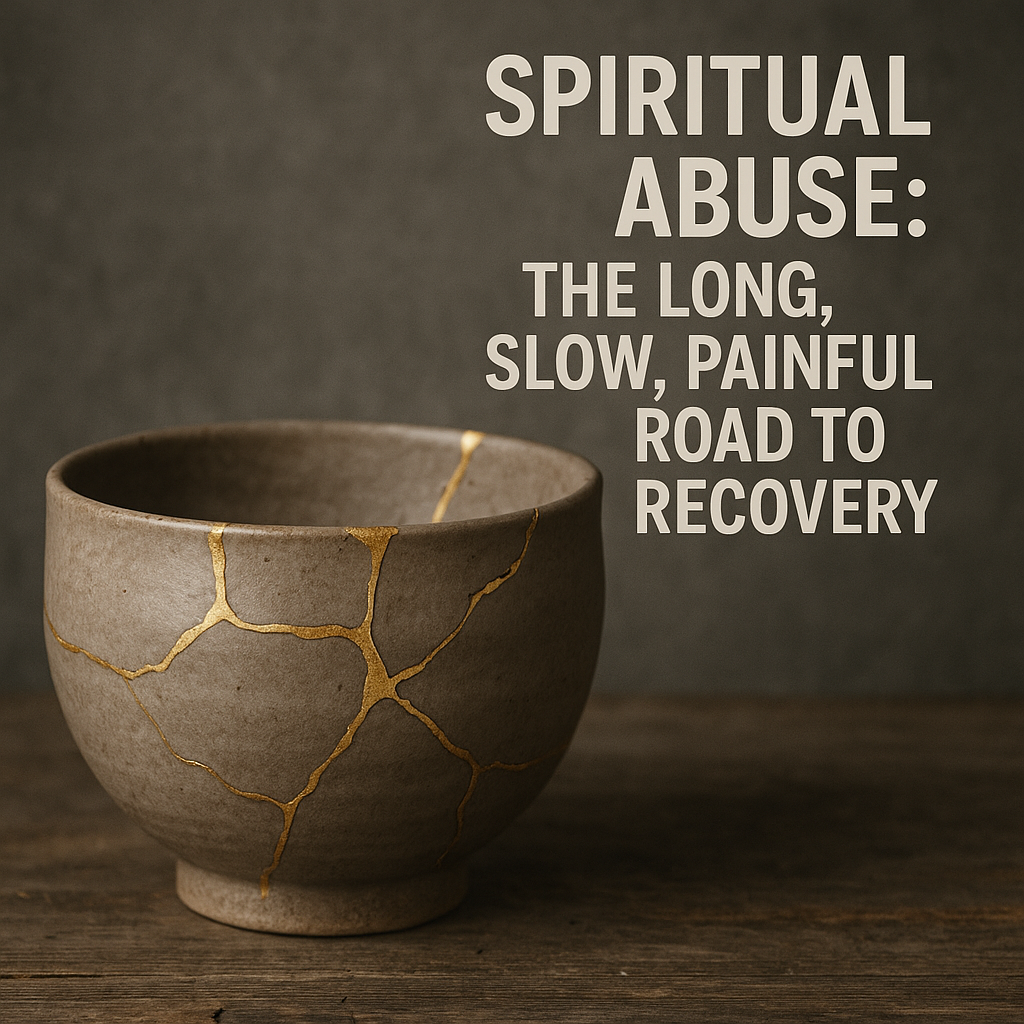
Spiritual Abuse; the Long, Slow, and Painful Road to Recovery
1. The Harm
What happened to me reveals why spiritual abuse is so uniquely devastating. Unlike other forms of harm, it pierces the heart of what gives life meaning – my relationship to the Dhamma (the Buddha’s teachings), to community, and to my identity as a spiritual practitioner.
I arrived at the monastery already knowing, from direct experience, that who I am at the deepest level is awareness, love, emptiness, and energy. These insights, however, did not act like armor. They did not neutralize the phosphorus burning into my core. They did not make the napalm of spiritual abuse any easier to wash off.
I was harmed – not just once, but in subtle, systemic, and overt ways over decades. Abiding awareness never left, but my insights became overlaid with confusion and pain. I couldn’t reconcile how such depth of realization in my teachers could coexist with behavior that delighted in violent subjugation, coercion, ostracism, and erasure. Or how some could describe the deathless (Nibbāna) with great familiarity while shouting at nuns morning and night for months.
The meditation cushion, once a gateway to peace, became a place of hypervigilance. Chants triggered anxiety. The language of surrender had been weaponized. Even seeing ochre robes – anywhere – could trigger a trauma response. The community of nuns was left shredded; women scattered in a kind of diaspora.
I had gone forth in faith, entrusting my life to the Buddha, Dhamma, and Sangha (the community). When the Vinaya – the monastic code – was used as a weapon, something foundational broke. Who was I, if the very thing I had given my life to caused such harm?
2. The Aftermath
My act of conscience – not participating in a ceremony where I could not do so with integrity – unleashed ill will, and the resulting targeting was devastating. When nuns participated, the wound cut even deeper.
At a spiritual abuse survivor’s group, I heard similar stories. Different details, same pattern: long-lasting harm to health, finances, and the will to live. Most were still struggling 10–15 years after leaving.
And yet, through it all, the knowing remained. The silence was still there. The taste of the deathless had not left. But alongside it was an emptiness devoid of warmth, a sadness that required an ocean to release, a tremble in my nervous system that took more than a decade to unwind.
The trauma response was complex. Sometimes I froze – body tight, breath shallow, mind blank. Other times, anger and grief flooded in. This wasn’t rage for domination – it was life force saying, “Enough. I deserve to exist.”
3. The Turning Toward Healing
Healing required courage, patience, and remembering that these intense states were visitors – not who I am. I learned to welcome them without acting destructively or turning them inward.
Over time, I found what worked:
- Attunement and safe relationships.
- Understanding my window of tolerance – the zone where I could process emotion and be present with sensations without overwhelm or shutdown.
- Titrating trauma memories with moments of pleasure and beauty.
- Gentle awakening of sensations – warm and cool, soft and rough.
- Movement and dance to reclaim my body.
- Allowing buried tension and trauma residue to surface and release.
- Reclaiming what was mine and letting go of what was never mine.
- Contact with animals – play, cuddles, purrs.
- Ideal Witness – Imagine or connect with figures who affirm your worth and boundaries.
I discovered frameworks explaining how someone could be spiritually realized yet unaware of their own anger. Narcissistic and attachment wounds do not necessarily shift through meditation alone – they often require other modalities. These insights shaped my work, leading me to create the Integrated Meditation Program, an attachment repair program for meditators, and teach Trauma-Informed Satipaṭṭhāna, which teaches the foundations of mindfulness with tools that allow those with trauma to engage in the practices safely.
Sometimes healing required bringing in an ideal witness – a loving imagined figure who could say:
“I see you. Your anger is valid. You matter. You get to have boundaries. You get to say no.”
4. The Wisdom Carried Forward
Spiritual abuse does not just wound – it disorients. It warps meaning. It can shatter identity.
And yet here I am: still aware, still listening, still devoted to truth. Willing to embrace the stillness and the great sorrow in loving awareness. Confident that who I am at the deepest level has never been harmed, and willing to do whatever it takes to live from that place.
This, too, is a form of faith.
Amma Thanasanti


 Amma Thanasanti
The Alchemy of Pressure: Diamond-Making Times

Socially Engineered Trauma

IMP Evaluation Results 2024
Awakening Truth Newsletter!