Dipa Ma: When Suffering Becomes the Path
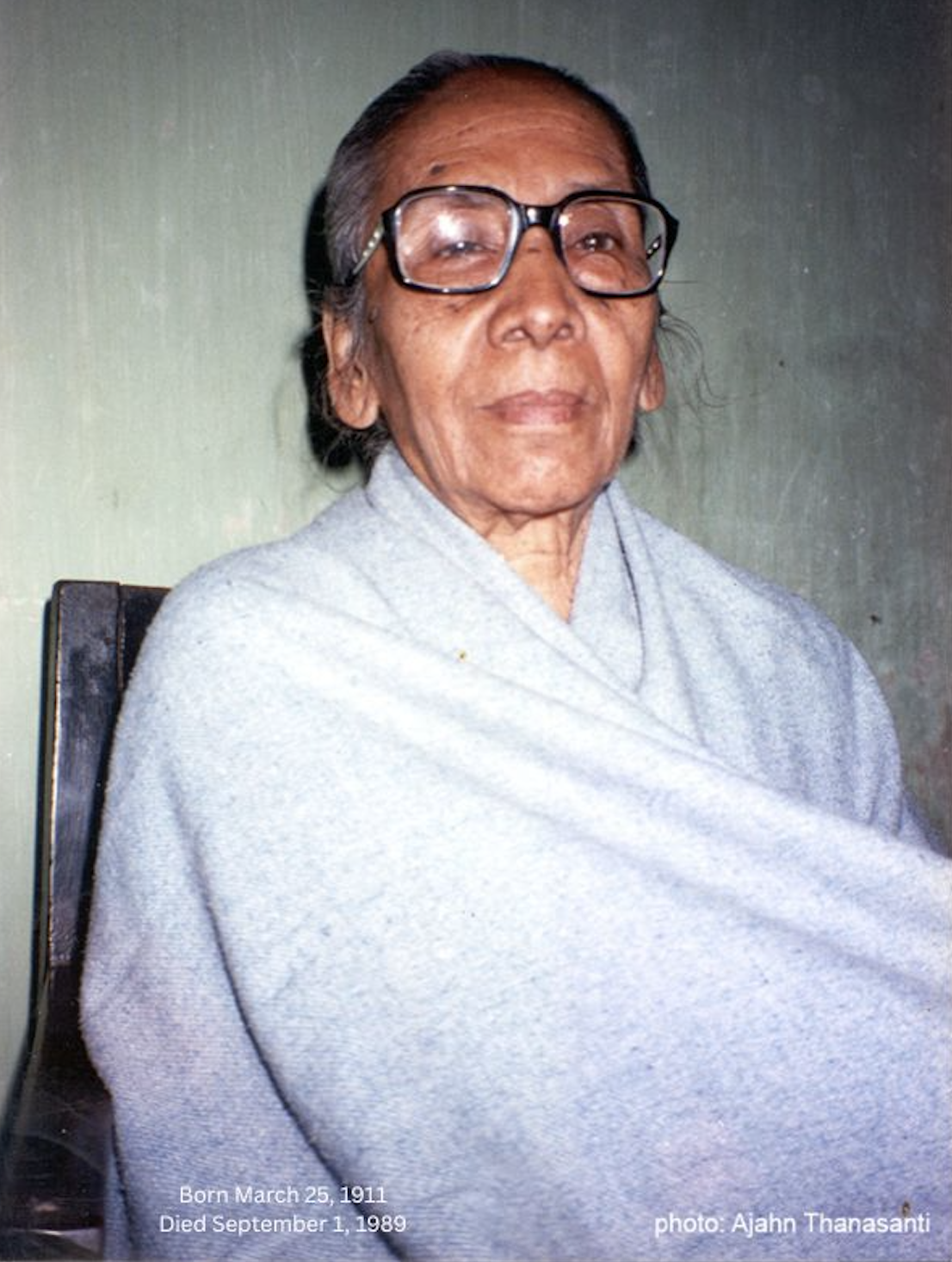
By Amma Thanasanti
“The whole path of mindfulness is this: Whatever you are doing, be aware of it.” — Dipa Ma
I first heard about Dipa Ma in 1979, sitting in Jack Engler’s class at UC Santa Cruz. I was seventeen, perched on the edge of my seat, falling forward into possibility. Jack had just returned from India, where he had spent time with Dipa Ma to understand what happens to the mind through meditation and awakening. His stories, some quiet and some astonishing, lit a live wire of determination in me: I wanted to give my life to the Dharma.
Years later, when I finally met her in Calcutta, I felt I had come home to what really matters.
In continuity with my recent blogs on spiritual abuse, patriarchy, and belonging, Dipa Ma’s life shows us how suffering can be transformed into seeds of awakening.
Her life, unvarnished and luminous
Born Nani Bala Barua in 1911 in Chittagong, she grew up with Buddhist roots and a deep sensibility for generosity. Life broke her open early: marriage at twelve, a move to Burma, long stretches of loneliness, illness, twenty years of infertility, betrayal, war, and then a brief, piercing brightness: a daughter, Dipa (“light”). More loss followed: another child died at birth, and soon after her husband died suddenly. Within a decade she had lost two children, both parents, her husband, her health, and her footing. A single mother in a foreign land, she was completely grief-stricken.
At the bottom of that well, she realized she had no interest in life as such. Only one thing seemed possible: meditation. She went all-in. What would bury most of us became fuel; what felt unendurable became the ground of practice. In time, her body steadied, her mind clarified, and her heart widened beyond measure.
Amy Schmidt’s books, Knee-Deep in Grace and Dipa Ma: The Life and Legacy of a Buddhist Master, gather many of these stories and show how her teaching spilled gently into kitchens, courtyards, and living rooms. By simply living, she showed awakening is not reserved for monasteries: it is possible in a crowded apartment, while cooking rice, holding a child, or answering the door.
“I can do anything that a man can do.”
One story that stayed with me came through Jack. Munindra-ji was teaching; the room was full of women and a few men. Someone asked about karma and the claim that only men can become Buddhas. Everyone thought Dipa Ma was asleep in the back. She sat up and said, clear and calm, “I can do anything that a man can do.” With these words she declared she had released the stranglehold of patriarchy; the laughter simply acknowledged her freedom.
Meeting her changed my life
Ten years after that class, I traveled to India and met her. The first time I sensed her, I wasn’t even facing her: a small figure wrapped in a white sari sat a few feet ahead on the floor of a meditation hall. Suddenly I felt a palpable field pressing against me, like a tide of presence coupled with kindness. I didn’t know who it was at first. Then I put it together: the impact was too immense. It had to be Dipa Ma.
Later, in her apartment, I received her blessing: tiny hands on my head, a soft chant. It felt like standing under a waterfall of love. Her presence was vast and oceanic; it rewired what I understood power to be. Not force. Not domination. A steadiness and capacity to be present, penetrating yet exquisitely tender.
I took a photo in her room that day. It is one of my treasures.
Root yourself in what matters most
Another memory: we were invited to celebrate a relative’s new apartment. It was a big moment. The apartment had a television, new kitchen equipment, and other features that signaled a level of affluence rare at that time. For the Barua clan, it was more than one family’s good fortune, it was a sign that reflected positively on everyone. The joy was collective, a huge celebration for the whole community.
I walked up the stairs with Dipa Ma, carrying her shoes. She stepped into the bustle with composure, no rush, no resistance, walked past the food drinks and chatter, and went straight to the Buddha. She bowed. That simple act still instructs me: root yourself in what matters most, then engage as you’re moved.
Planting a tree for her
After India I spent time in Thailand and later at Amaravati in England, where I became a nun. I planted a sapling in her memory in the Buddha Grove. For years it was unmarked. When I returned after being away for a few years, I went tree to tree, leaning my back against each trunk to recognize “hers.” Most felt solid, neutral. And then one felt like a waterfall of love. I knew I had found it. Later, Cathy Halter, who didn’t know its story, referred to it, unprompted, as “the mother tree.” Sometimes the Dharma does not need introductions; it announces itself.
The blessing that keeps giving
In a talk about her, I offered a simple practice learned by being with her: imagine Dipa Ma before you, tiny hands resting on your head, whispering a chant, blowing a blessing over your head. Feel love, steady, patient, immeasurable, filling shoulders, spine, belly, bones. Notice the softening. The space. The clarity that arrives without urgency. That love is not a memory; it is what presence feels like when the heart is unarmored. It is not just “hers.” It is the nature of awareness when nothing obscures its other faces: warmth and closeness.
Suffering is not an obstacle to awakening
Dipa Ma never glamorized pain. She did not bypass it either. She met it. She practiced in the middle of it. She let it teach her what is solid and what dissolves, what binds and what frees. Her life proclaims: suffering is not the gatekeeper we must defeat before we can awaken. Suffering can be the path itself, the very ground that grows patience, tenderness, insight, unshakable love, and a commitment to harmlessness.
Her example gave me permission to trust practice in the midst of shock, illness, and grief. When I finally met her, I remember thinking, “If my life ended now, it would be enough to have known this quality of love.” She gave me a living reference point, clarity and kindness braided together, that I could return to in the hardest seasons of my life.
Why she matters now
We are living through overlapping crises: old traumas resurfacing in new forms, deepening polarization, democratic destabilization, the grief of climate chaos, and the unthinkable reality of genocide. It is easy to feel daunted. Dipa Ma’s gift is the refusal to make an enemy of difficulty. She invites us to begin exactly where we are: to tie our shoes with awareness, to listen with our whole body, to let love be practical, stroking a child’s hair, washing a dish, answering a message with care.
She also showed me a form of power I trust: not “power over,” but power with. A power that co-regulates, dignifies, and steadies the nervous system by being profoundly present. This is the kind of power our world needs to heal what patriarchy, supremacy, and disconnection have broken. And it is the kind of power any of us can cultivate, one breath, one act rooted in what is important at a time.
Embodying What She Lived
- Prioritize. Orient to what you love before engaging the whirlwind.
-
Practice in the middle. Do not wait to feel better to begin. Begin now; the practice does its work.
-
Marry mindfulness with loving-kindness. Clear seeing that is also warm, interested, close.
-
Let blessing move through you. When you have been filled, share it back to teachers, friends, communities, and outward to all beings.
Today, I remember Dipa Ma: her strength, her gentleness, her fierce determination. She showed me that even in intense suffering, awakening is possible. May her life remind us that suffering itself can open the way to awakening and give us courage and love in these times.

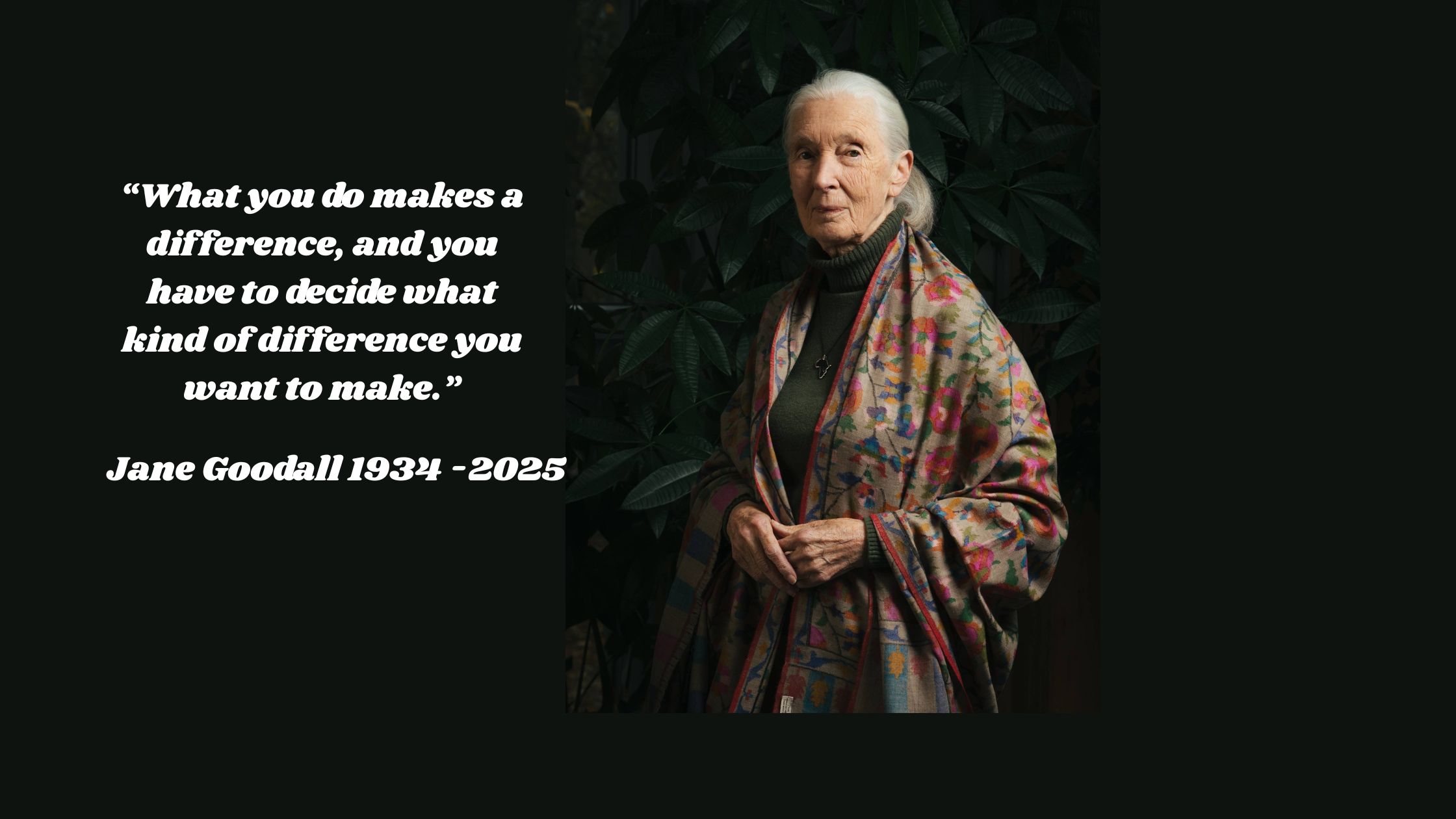
Jane Goodall — A compassionate Revolutionary
Dipa Ma: When Suffering Becomes the Path
When Belonging Costs Too Much: Discernment and Harmlessness on the Path of Awakening
Awakening Truth Newsletter!